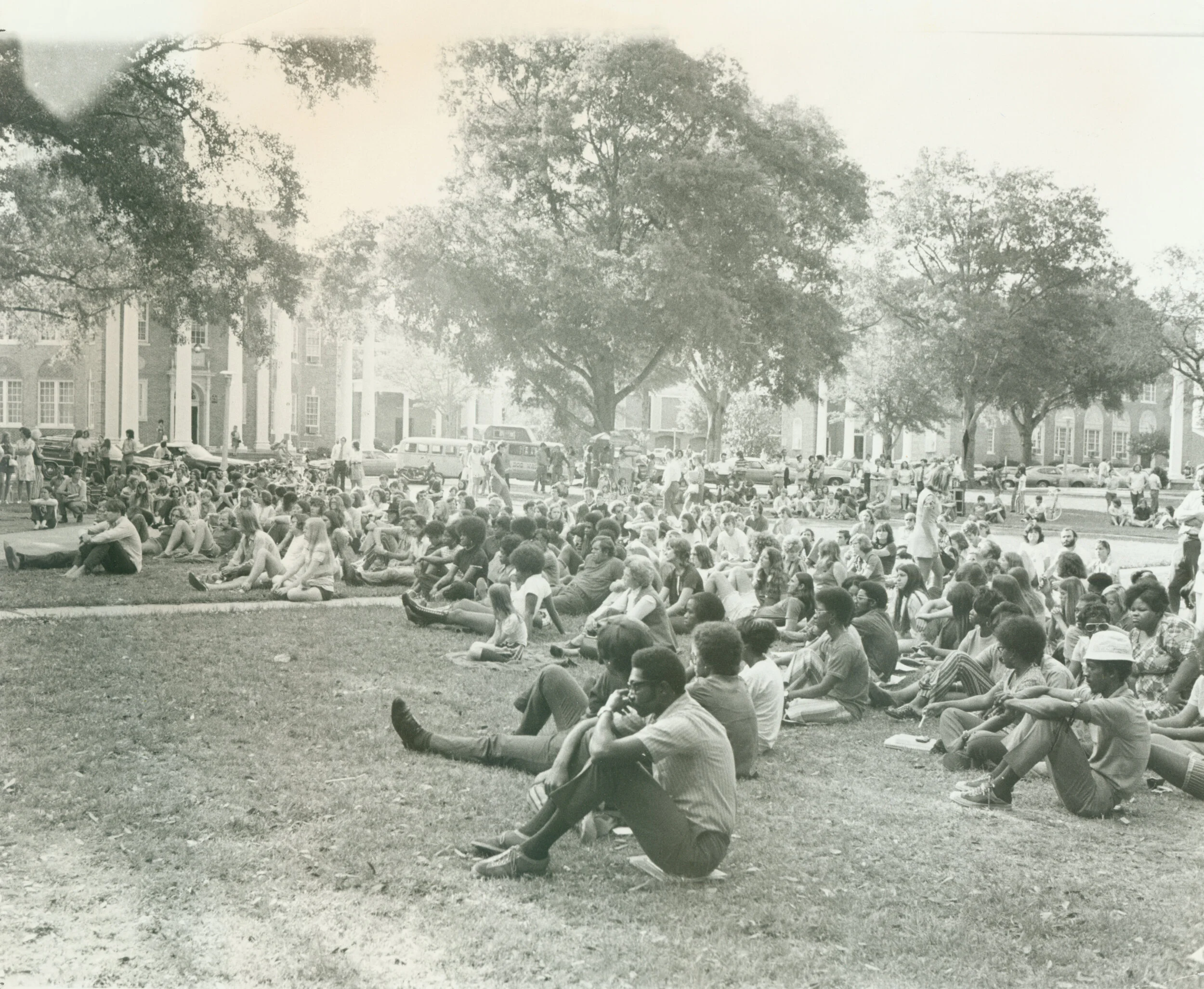
Oral history.; Miss Oseola McCarty was born on March 7, 1908, in Wayne County, Mississippi. McCarty attended Eureka Elementary School until the sixth grade when she dropped out to care for an aunt who was ill. While still in school, McCarty began...
Oral history.; Interview conducted on June 8, 1976, with Will D. Campbell. Mr. Campbell, born in Amite County, Mississippi, was ordained as a pastor at the age of 17. He first became aware of race relations during time spent in the military, when...
Oral history.; Dr. Antone Walter Tannehill, Jr., was born May 22, 1929, in New Orleans, Louisiana, but grew up in Hattiesburg, Mississippi. He attended Vanderbilt University and Duke University Medical School. He served an internship at the...
Oral history.; Mrs. Clara Griffin Watson was born in Biloxi, Mississippi, on October 15, 1933. During the 1960s, Mrs. Watson helped the COFO workers in Mississippi, marched on the Federal Building, and housed some of the civil rights activists in...
Oral history.; Interview conducted on June 10, 1994 with Fred Clark Sr. (born 1943). Mr. Clark grew up in the segregated society of Jackson, Mississippi. He was educated in Jackson, attending Smith Robertson Elementary School, Rowan Junior High,...
Oral history.; Mrs. Sarah Harris Ruffin was born on April 15, 1914. Her parents came to Hattiesburg in the early 1900s. When young, Mrs. Ruffin did domestic and warehouse work. In 1949, she began working at the Brooklyn Jewish Hospital as a nurse's...
Oral history.; Interview conducted on November 7, 1979 with Mrs. Minnie Ripley on the street named after her, Ripley Street, in Mayersville, Mississippi. Ripley was born on August 22, 1900 in Vicksburg, Mississippi. She attended public schools in...
From the Hattiesburg Historical Photographs; Photograph of Dr. Sweet and a nurse from the Public Health Service at work during the influenza epidemic of 1918.
cartoon by John Riedell; An African American nurse tells the doctor,"With a heart transplant, he'll pull through." The doctor checks on a patient with one white foot and one black foot. The hospital bed is labeled "Racial Cooperation."
A collection of ten interviews with participants in the Mississippi civil rights movement. The people interviewed discuss how they came to participate in the civil rights movement, their various activities, including voter registration, Freedom...
A collection of six interviews with participants in the Mississippi civil rights movement. The people interviewed discuss how they came to participate in the civil rights movement, their various activities, including voter registration, Freedom...
A collection of eight interviews with participants in the Mississippi civil rights movement. The people interviewed discuss how they came to participate in the civil rights movement, their various activities, including voter registration, Freedom...
Oral history.; An interview conducted on May 19, 2008 with Laura Clare Thompson Creel. A life-long resident of Biloxi, Mrs. Creel recounts her family history and experience dealing with hurricanes, including Hurricane Katrina.
Oral history.; An interview conducted on October 27, 2005 with Louis Gomez. A registered nurse with American Medical Response, Mr. Gomez describes his responsibility for managing a special-needs shelter in Biloxi, Mississippi during Hurricane...
Oral history.; An interview conducted on October 29, 2005 with C.A. ""Troy"" Guider. Mr. Guider discusses his experiences during and after Hurricane Katrina in Biloxi, Mississippi.
Oral history.; Two interviews conducted on June 12, 2007 and February 20, 2008 with Robert Gavagnie. A descendent of some of the first settlers on the Mississippi Gulf Coast, Mr. Gavagnie discusses his experiences as Chief of the Bay St. Louis...