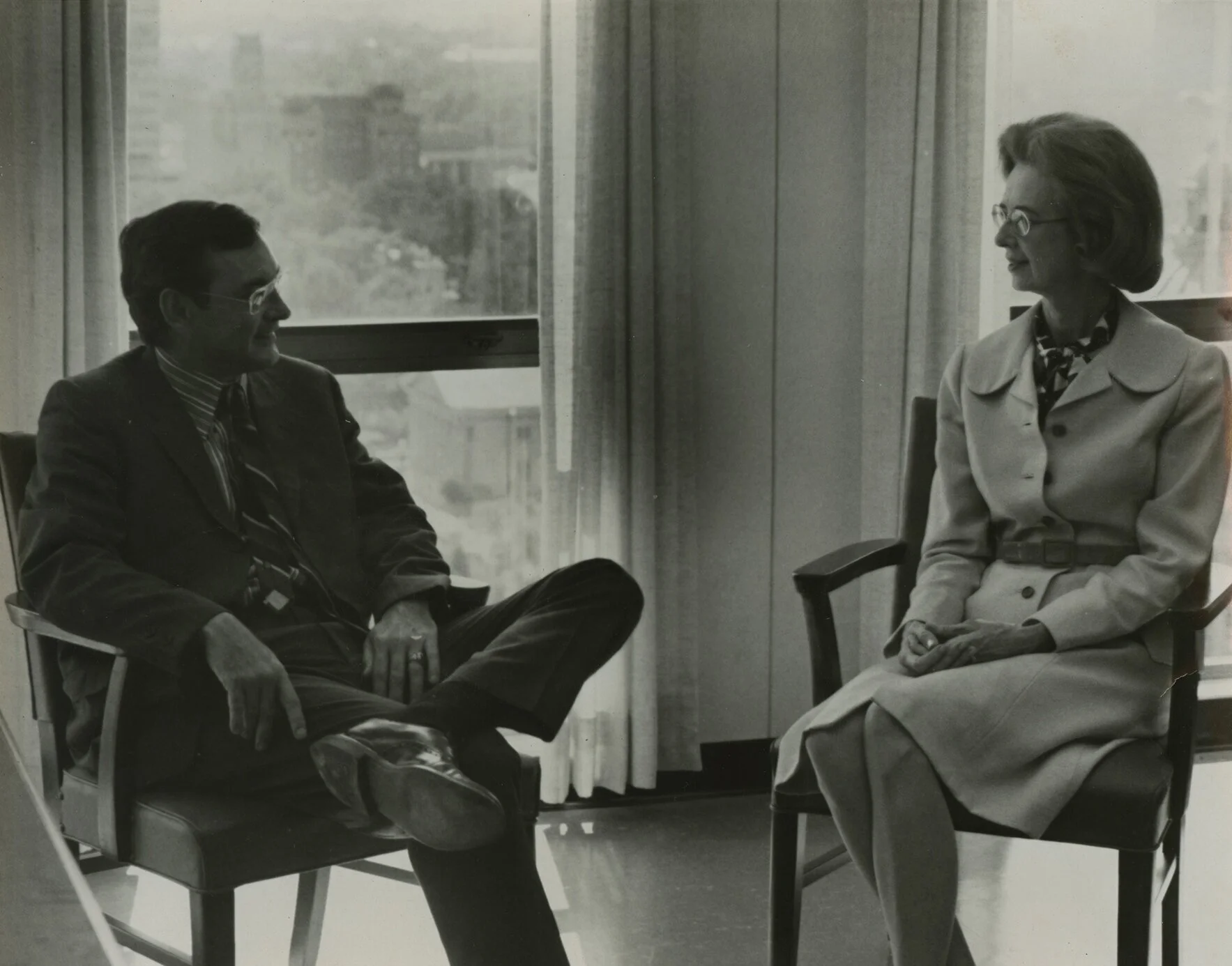
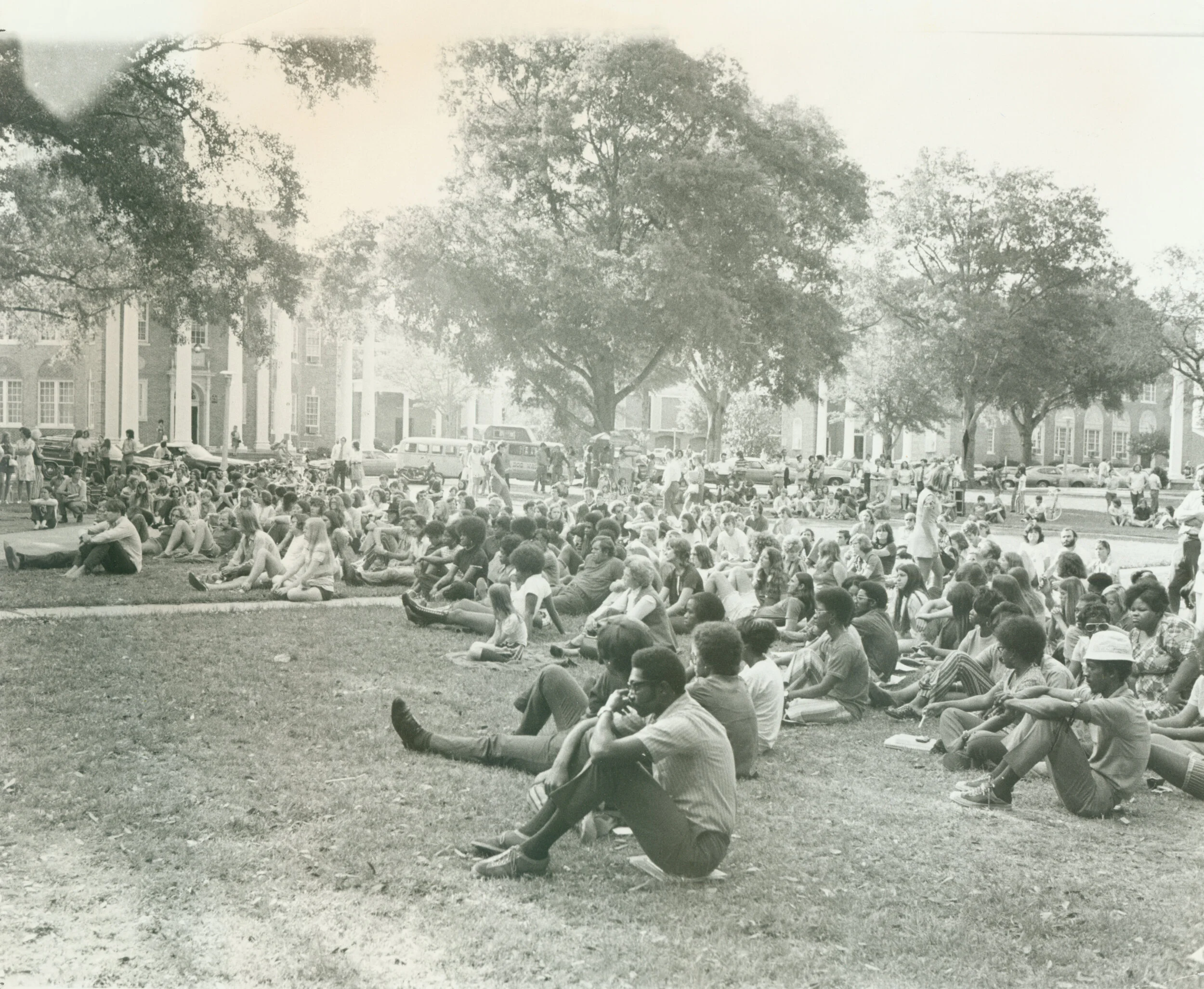
Oral history.; Two interviews conducted on July 8 and 23, 1980 with the Reverend Clay F. Lee at his study in Jackson, Mississippi. Lee was born on March 3, 1930 in Laurel, Mississippi. After graduating with his undergraduate degree from Millsaps...
Oral history.; Interview conducted on January 5, 1978 with Miss Florence Mars at her home in Philadelphia, Mississippi. Mars was born on January 1, 1923 in Philadelphia, Mississippi. She studied at Millsaps College and University of Mississippi,...
Oral history.; Interview conducted on June 26, 1979 with Mr. William J. Simmons at his office in Jackson, Mississippi. Simmons was born in 1916 in Utica, Mississippi. He attended Millsaps College and Mississippi College, graduating from the...
Oral history.; Interview conducted on March 23, 1977 with Mr. Jimmy Swan. Swan was born in Cullman County, Alabama. He ran away from home when he was thirteen or fourteen and ended up in Wayne County, Mississippi. Swan sang in nightclubs and...
Oral history.; Borganelli discusses her teaching career and family, public education in Mississippi, the Mississippi Humanities Council, and race relations in Mississippi.
From the Dahl (Kathleen) Freedom Summer Collection. Brochure describing the mission and motivations of the James E. Chaney Institute of Laurel, Mississippi, incorporated in 1993. Includes biographical information on James Earl Chaney and defines...
From the Zeman (Zoya) Freedom Summer Collection. Describes the Student Nonviolent Coordinating Committee (SNCC), its structure and leadership, history, programs, and future plans.
From the Miller (Michael J.) Civil Rights Collection; The brochure discusses the use of food stamps and the unequal distribution of commodities in Mississippi, lists the food categories from which everyone should eat to maintain physical health,...
From the Miller (Michael J.) Civil Rights Collection; The brochure points out the decision to have the commodity program, the decision to give commodities to people only on welfare, or to give commodities only in winter, are made by the all-white...
From the Miller (Michael J.) Civil Rights Collection; The brochure, from the Medical Committee for Human Rights (MCHR), explains the reason for its formation, seeks to recruit new members, and requests funds to keep the organization in existence.
From the Miller (Michael J.) Civil Rights Collection; The brochure discusses the unequal distribution of commodities in Mississippi, and points out the federal goverment will be hiring Mississippians to give out the food commodities to the poor.